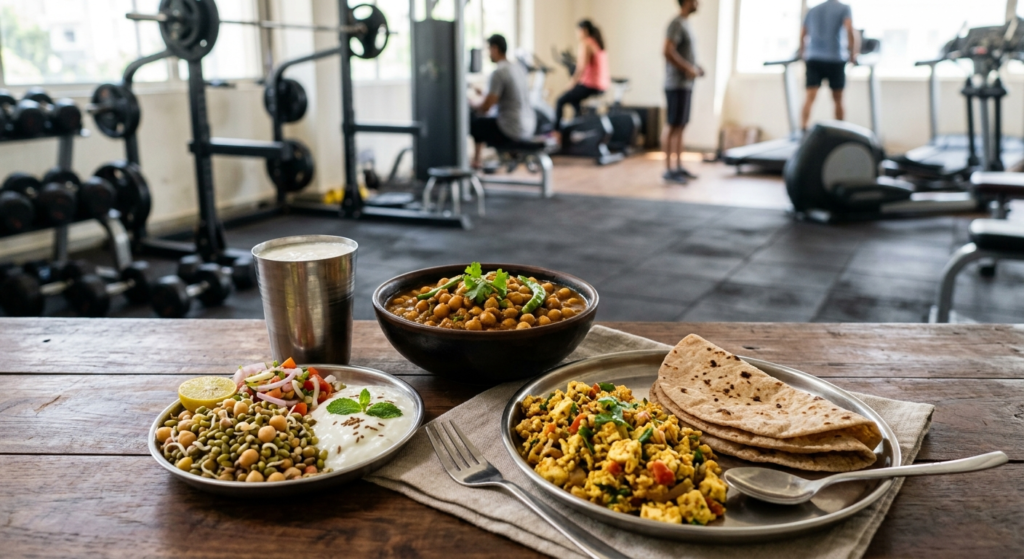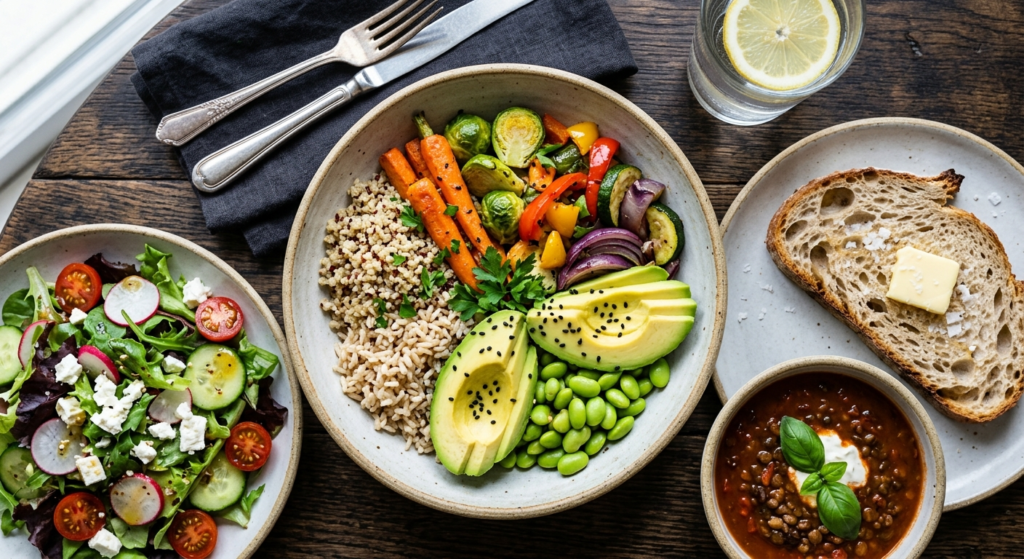

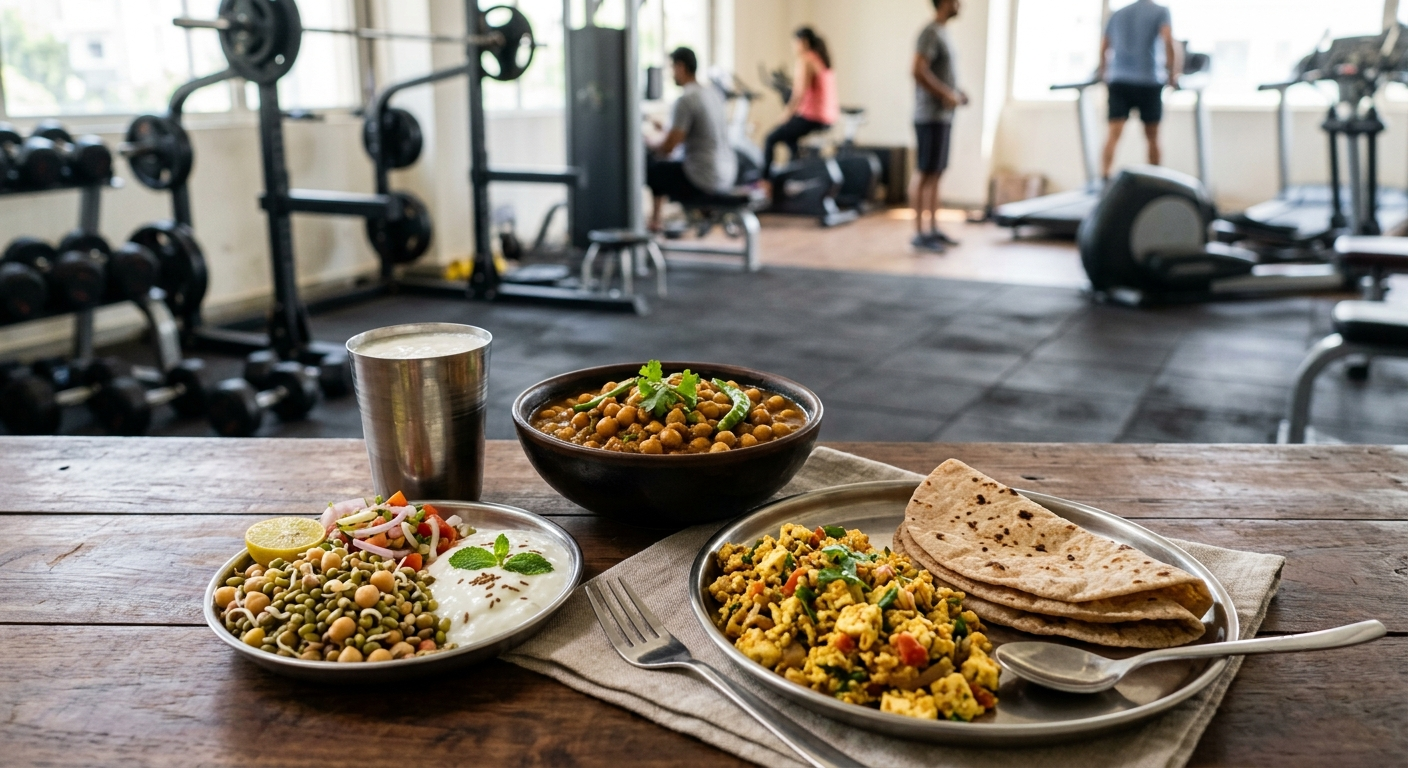

10 Affordable High-Protein Indian Foods for Muscle Gain
Building muscle does not always require expensive supplements or a complicated diet. For many people in India, everyday foods such as eggs, dal, paneer, milk, chana and soya chunks can provide useful amounts of protein at a relatively affordable cost.
However, nutrition is only one part of muscle building. Consistent resistance training, enough total calories, adequate recovery and a balanced diet all matter. Research on resistance training suggests that increasing protein intake can support gains in lean mass and strength, with benefits tending to level off around approximately 1.6 g of protein per kg of body weight per day for many healthy adults doing resistance training. Individual needs can still vary.
The good news is that you can build a practical high-protein diet using familiar Indian foods without depending entirely on expensive supplements.
Note: Prices and nutrition values are approximate. They can vary by brand, city, preparation method and whether the food is measured dry or cooked. The ₹100 budget is an approximate guide, not a guaranteed retail price.
Why Protein Matters for Muscle Gain
Protein provides amino acids that the body uses to build and repair tissues. When you perform resistance training, your muscles are exposed to a training stimulus that can promote adaptation. Adequate protein helps provide the building blocks needed for these processes.
But eating more protein alone will not automatically build muscle.
A muscle-building routine generally needs:
- Progressive resistance training
- Sufficient protein
- Enough overall food and energy
- Good sleep and recovery
- Consistency over time
This is why your diet and gym routine should work together rather than treating protein as a shortcut.
10 High-Protein Indian Foods Under ₹100
1. Eggs
Protein: Around 6–7g per large egg
Budget: Often one of the more affordable animal-protein options
Eggs are convenient, versatile and provide high-quality protein containing all essential amino acids.
You can use them as part of breakfast, lunch or a post-workout meal.
Easy options:
- Boiled eggs
- Egg bhurji
- Omelette with vegetables
- Eggs with roti or whole-grain toast
If you eat eggs, they can be an easy way to increase the protein content of your regular meals without making your diet complicated.
2. Paneer
Protein: Roughly 18–20g per 100g, depending on the product
Budget: ₹100 may buy a smaller serving depending on the brand and local price
Paneer is a popular vegetarian protein source and can be useful for people who want to increase protein intake without eating meat or eggs.
Because paneer can also contain significant amounts of fat and calories depending on how it is prepared, portion size should match your overall fitness goal.
Try it as:
- Paneer bhurji
- Grilled paneer
- Paneer with vegetables
- Paneer added to a balanced meal
3. Moong Dal
Protein: Approximately 23–24g per 100g dry dal
Budget: Usually economical as a staple food
Moong dal is a practical Indian food that provides protein along with carbohydrates, fiber and other nutrients.
One important point is that dry and cooked weights should not be compared directly. Once dal is cooked, it absorbs water, so protein per 100g of the cooked dish is lower than the dry-weight figure.
Easy options include:
- Moong dal
- Dal khichdi
- Moong dal chilla
- Sprouted moong preparations
4. Chana
Protein: Approximately 19g per 100g dry chickpeas; cooked values are lower per 100g because of water absorption
Budget: Generally one of the more affordable legumes
Chana provides both protein and dietary fiber, making it a useful addition to a balanced muscle-building diet.
You can prepare it as:
- Chana chaat
- Kala chana salad
- Chole
- Chana with roti
For people on a budget, legumes can be an important part of a high-protein meal plan.
5. Soya Chunks
Protein: Around 50g per 100g dry product, depending on the brand
Budget: A relatively inexpensive protein-dense option
Soya chunks are particularly useful for people following a vegetarian diet.
The important thing to remember is that the commonly quoted high protein number is based on the dry product. Soya chunks absorb water when soaked and cooked, so 100g of cooked soya chunks will contain considerably less protein than 100g of the dry product.
Try them in:
- Soya curry
- Soya pulao
- Soya keema-style preparation
- Mixed vegetable stir-fry
6. Peanuts
Protein: Around 25–26g per 100g
Budget: Usually an economical snack option
Peanuts provide protein as well as fats and are highly calorie-dense.
That makes them useful for people who need more calories, but portion control matters if your goal is fat loss or maintaining a calorie deficit.
A small serving of roasted peanuts can be a convenient snack between meals.
7. Curd or Dahi
Protein: Around 3–4g per 100g for regular curd, although values vary
Budget: Usually affordable and easy to include in meals
Curd is not as protein-dense as paneer, eggs or soya chunks, but it can still contribute to daily protein intake.
It also works well as part of a balanced meal.
Try it with:
- Dal and roti
- Rice and vegetables
- Homemade raita
- A balanced breakfast
If your primary goal is to increase protein, higher-protein dairy options may provide more protein per serving than regular curd.
8. Sprouted Moong
Protein: Varies depending on the type of sprout and preparation
Budget: Generally inexpensive when prepared at home
Sprouted moong can be a convenient addition to a healthy diet. However, it should not be presented as a magical protein food or as having dramatically more protein simply because it has been sprouted.
Sprouting changes the food’s nutritional characteristics and may affect digestibility, but the total protein content does not suddenly increase substantially.
Try it as:
- Sprout chaat
- Moong salad
- Sprouts with vegetables and lemon
- A side dish with lunch
For food-safety reasons, people should also take care with raw or lightly cooked sprouts.
9. Milk
Protein: Approximately 3–3.5g per 100ml
Budget: Usually affordable as an everyday food
Milk provides both whey and casein proteins and can be an easy way to add protein to your daily diet.
A glass of milk can be combined with other foods rather than treated as a complete muscle-building meal by itself.
For example:
Milk + oats + banana + a controlled serving of peanuts
can create a more substantial breakfast or snack.
10. Rajma
Protein: Approximately 8–9g per 100g cooked; dry values are considerably higher
Budget: Generally affordable as a staple pulse
Rajma is another useful legume for people who want to include more plant-based protein in their diet.
Rajma provides protein and carbohydrates along with fiber. Combining different plant foods across the day can help provide a broader range of essential amino acids.
Try it as:
- Rajma chawal
- Rajma with roti
- Rajma salad
- Rajma with vegetables
And yes, a well-prepared bowl of rajma can absolutely have a place in a muscle-building diet.
High-Protein Foods: Quick Comparison
| Food | Approx. Protein | Budget-Friendly? | Easy Use |
|---|---|---|---|
| Eggs | 6–7g per egg | Yes | Breakfast/snack |
| Paneer | 18–20g/100g | Moderate | Main meal |
| Moong dal | ~23–24g/100g dry | Yes | Dal/chilla |
| Chana | ~19g/100g dry | Yes | Chaat/curry |
| Soya chunks | ~50g/100g dry | Yes | Curry/pulao |
| Peanuts | ~25–26g/100g | Yes | Snack |
| Regular curd | ~3–4g/100g | Yes | Meal/snack |
| Sprouted moong | Variable | Yes | Salad/chaat |
| Milk | ~3–3.5g/100ml | Yes | Drink/smoothie |
| Rajma | ~8–9g/100g cooked | Yes | Curry/meal |
Important: Protein values are approximate. Always compare foods using the same measurement basis—dry with dry or cooked with cooked. Product labels and reliable food-composition databases should be used when exact nutritional values are important.
How to Build a Budget-Friendly Muscle-Building Diet
You don’t need to eat all 10 foods every day.
Instead, build your meals around a few reliable protein sources.
1. Add Protein to Every Main Meal
For example:
Breakfast: Eggs + roti + fruit
Lunch: Dal + rice + curd + vegetables
Snack: Milk + peanuts
Dinner: Paneer or soya + roti + vegetables
The exact portions should depend on your body size, activity level and fitness goal.
2. Spread Protein Across the Day
Rather than trying to consume most of your protein in one meal, include protein-containing foods throughout the day.
This can make it easier to meet your total daily requirement.
3. Combine Different Protein Sources
Vegetarian diets can include combinations of pulses, grains, dairy, soy, nuts and seeds.
You don’t need to create a “perfect” amino-acid combination in every single meal. Eating a varied diet across the day is a more practical approach.
4. Don’t Forget Carbohydrates and Healthy Fats
Protein is important, but it isn’t the only nutrient needed for training.
Rice, roti, oats, potatoes, fruits and other carbohydrate sources can provide energy for workouts, while nuts, seeds and other foods can contribute healthy fats.
A muscle-building diet should be balanced rather than protein-only.
5. Train Consistently
Nutrition works best when paired with an appropriate resistance-training program.
Research consistently supports resistance training as an important stimulus for increasing muscle strength and hypertrophy.
If you’re new to strength training, learning proper exercise technique and following a structured program can be more useful than simply lifting heavier weights without a plan.
Protein and Your Gym Routine at Elevate Wellness Club
Food is one part of your muscle-building journey. Your training routine matters just as much.
At Elevate Wellness Club, members can access strength training, personal training, functional training, cardio and other fitness programs designed around different training goals. The club currently has fitness centers serving Ludhiana, Mohali, Panchkula, Zirakpur and Peer Muchalla.
If you’re working toward muscle gain, a practical approach is to combine:
- Structured resistance training
- Adequate daily protein
- Balanced meals
- Progressive training
- Proper recovery
- Consistent sleep
- Regular progress tracking
Whether you’re looking for a gym in Ludhiana, training in Mohali or Panchkula, or a convenient fitness facility in Zirakpur or Peer Muchalla, choosing a location that fits your routine can make consistency easier.
At Elevate Wellness Club, the focus can be on building a sustainable fitness routine rather than depending on quick fixes or unrealistic claims.
Do You Need Protein Supplements?
Not necessarily.
Many people can obtain substantial amounts of protein from ordinary foods. Protein supplements can be convenient when someone struggles to meet their protein needs through food, but they are not compulsory for building muscle. The NIH also notes that athletes can often obtain enough protein through food, while supplements may help when dietary intake is difficult to achieve.
Think of supplements as a convenience, not a requirement.
Your first priority should be a balanced diet and consistent training.
Final Thoughts
Building muscle on a budget is possible without turning your kitchen into a supplement store.
Eggs, paneer, dal, chana, soya chunks, peanuts, curd, milk and rajma can all have a place in a balanced diet. The key is not to search for one “magic” food. Instead, focus on getting enough total protein, eating a balanced diet and following a consistent strength-training routine.
If you’re ready to combine better nutrition with structured workouts, Elevate Wellness Club provides fitness and training options across Ludhiana, Mohali, Panchkula, Zirakpur and Peer Muchalla.
Build your meals wisely, train consistently, recover properly and give your body time to adapt.
Muscle gain is a process—not a one-food solution.
This article is intended for general nutrition and fitness education. Protein requirements can vary based on age, body size, training volume, health status and individual goals. If you have a medical condition or specific dietary requirements, consult a qualified healthcare or nutrition professional.
Frequently Asked Questions
Foods such as dal, chana, rajma, peanuts and soya chunks are generally among the more economical protein-containing foods. Actual prices vary by city, brand and quantity.
Yes. Many people can meet their protein requirements through foods such as eggs, dairy, soy, pulses, nuts and other protein-rich foods. Supplements are optional rather than essential.
There is no single number that applies to everyone. Research in resistance-trained adults commonly finds benefits from higher protein intake, with around 1.6g/kg/day often appearing close to the point where additional protein provides limited extra benefit for muscle gain. Your individual requirement can differ.
Paneer can be a useful protein source for muscle-building diets, particularly for vegetarians. However, portion size matters because paneer can also contribute substantial calories and fat.
When compared by dry weight, soya chunks can show a very high protein value. However, soya absorbs water during cooking, so dry and cooked foods should not be compared directly. The comparison also depends on the exact product and preparation.
Yes. Vegetarian diets can include protein from soy, dairy, pulses, legumes, nuts, seeds and other foods. A varied diet and appropriate total protein intake are important.
Eggs with roti, moong dal chilla with curd, paneer-based breakfast options, or milk combined with oats and another protein source can all be practical choices.
No. Protein supports the body’s muscle-building processes, but resistance training provides an important stimulus. Adequate nutrition, training, recovery and consistency need to work together.