

Understanding Body Mass Index (BMI) and How It Affects Your Health
When people start focusing on their health and fitness, one of the first measurements they often come across is Body Mass Index, commonly known as BMI. It is a simple measurement that uses your height and weight to provide a general indication of whether your weight falls within a certain range.
However, BMI is only one part of the health picture. It does not directly measure body fat, muscle mass, fitness level, or overall well-being. Understanding what BMI means and how to use it properly can help you make more informed decisions about your health and fitness goals.
What Is Body Mass Index (BMI)?
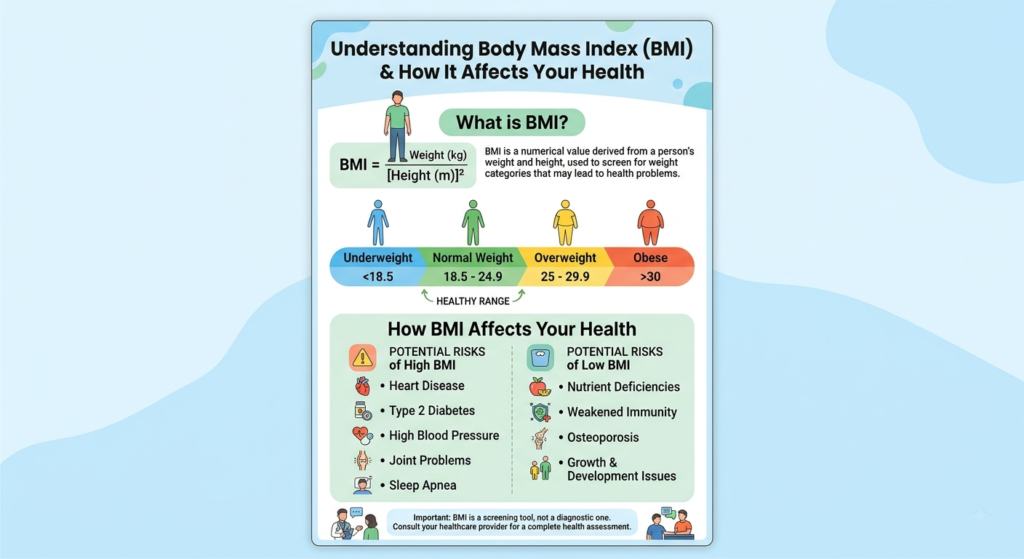
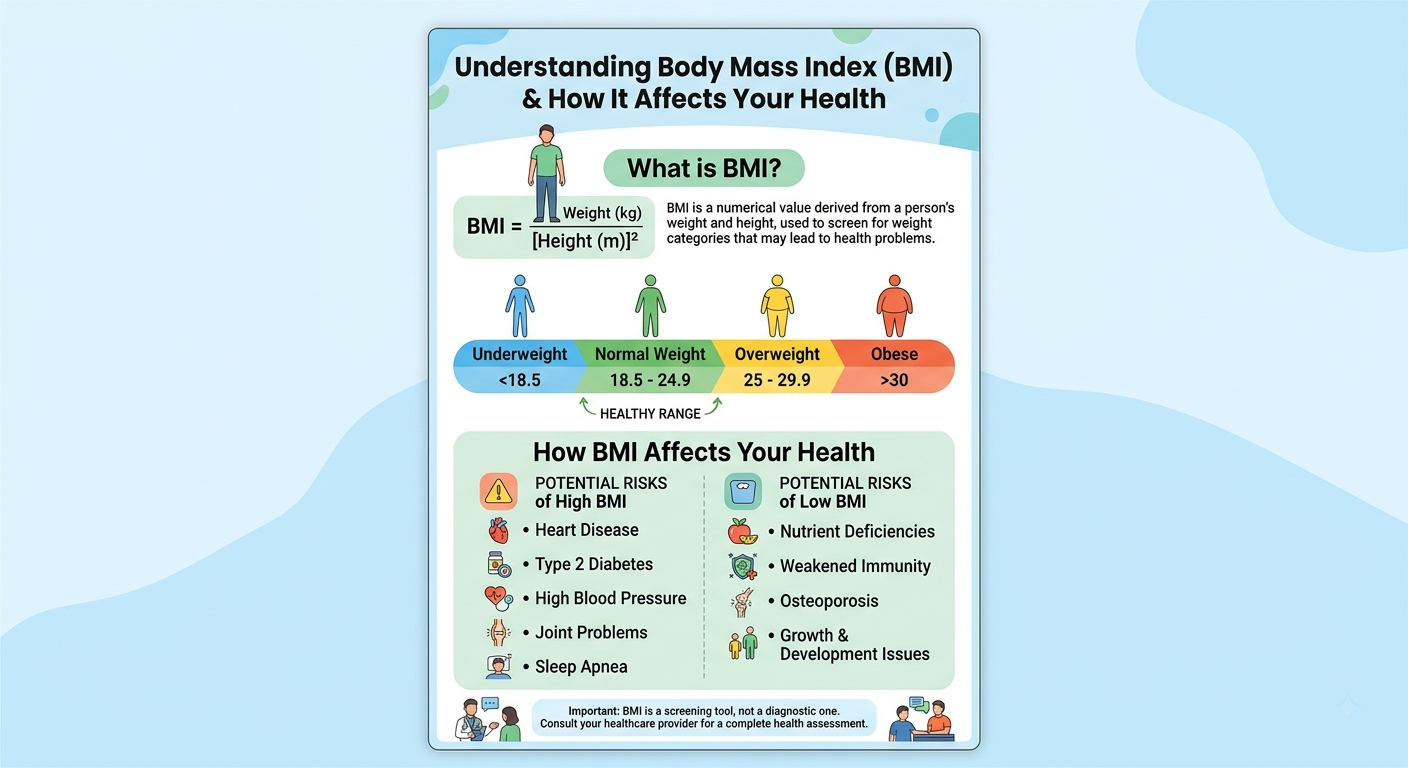
Body Mass Index is a screening measurement that compares a person’s weight with their height. It is commonly used to place adults into general weight categories.
BMI can provide a useful starting point when looking at weight-related health risks, but it should not be treated as a complete assessment of an individual’s health.
For example, two people can have the same BMI but have very different levels of muscle, body fat, fitness, and physical activity.
This is why BMI is most useful when considered alongside other factors such as lifestyle, exercise habits, body composition, and overall health.
How Is BMI Calculated?
BMI is calculated using a person’s weight and height.
The standard formula is:
BMI = Weight in kilograms ÷ Height in meters²
For example, if someone weighs 70 kilograms and is 1.75 meters tall, their BMI would be approximately 22.9.
Online BMI calculators can make this calculation easier, but understanding the number is more important than simply calculating it.
What Do BMI Categories Mean?
For adults, BMI is commonly grouped into the following categories:
- Below 18.5: Underweight
- 18.5 to 24.9: Healthy weight range
- 25.0 to 29.9: Overweight
- 30.0 or higher: Obesity
These categories are general screening ranges. They should not be used on their own to determine whether a person is healthy or unhealthy.
Factors such as age, muscle mass, body-fat distribution, lifestyle, and medical history can influence how a BMI number should be interpreted.
Why BMI Does Not Tell the Whole Story
BMI is convenient because it is simple to calculate, but it has important limitations.
BMI Does Not Measure Muscle Mass
Muscle is denser than fat. Someone who regularly performs strength training may have a higher body weight because of greater muscle mass.
As a result, a muscular person could have a BMI in the overweight range while having a relatively healthy body-fat level.
This is one reason why BMI should not be used as the only measurement of fitness or health.
BMI Does Not Show Where Body Fat Is Stored
Where fat is stored can also be important. Measurements such as waist circumference may provide additional information about body-fat distribution.
BMI Does Not Measure Fitness
A BMI number does not tell you how strong, active, flexible, or aerobically fit you are.
Two people with the same BMI can have completely different fitness levels depending on their exercise habits and lifestyle.
BMI Does Not Consider Every Individual Health Factor
Health is influenced by many factors, including nutrition, physical activity, sleep, stress, genetics, medical history, and other lifestyle habits.
For this reason, BMI should be viewed as one piece of information rather than a final health assessment.
How BMI Relates to Weight Management
BMI can sometimes encourage people to take a closer look at their lifestyle and weight-management habits. However, improving health should be about more than reaching a particular number on a scale.
A sustainable approach usually involves:
- Regular physical activity
- Balanced nutrition
- Strength training
- Cardiovascular exercise
- Adequate sleep
- Consistent daily habits
- Appropriate recovery
- Realistic fitness goals
Instead of focusing only on BMI, consider broader improvements such as increased strength, better stamina, improved mobility, healthier eating habits, and greater consistency with exercise.
Can Exercise Help Improve Body Composition?
Regular exercise can support healthy weight management and improve overall fitness.
Strength Training
Strength training can help build and maintain muscle while supporting physical strength. Exercises can include resistance machines, free weights, bodyweight movements, and functional exercises.
Building muscle can also change body composition even when the number on the scale does not change significantly.
Cardio Training
Activities such as walking, cycling, running, swimming, and other forms of cardiovascular exercise can help improve cardiovascular fitness and increase daily energy expenditure.
Functional Training
Functional exercises focus on movements that can support strength, balance, coordination, and everyday physical activity.
Personal Training
Working with a qualified fitness professional can make it easier to create an exercise routine based on your current fitness level and goals.
A structured approach can be especially useful for beginners who are unsure how to start exercising or people who need additional guidance and accountability.
BMI and Different Fitness Goals
Not everyone has the same reason for exercising.
Some people want to lose weight, while others want to build muscle, improve strength, increase endurance, or simply become more active.
Your fitness plan should therefore reflect your individual goal rather than focusing exclusively on BMI.
For example:
Weight-management goal:
A combination of regular exercise, balanced nutrition, and sustainable lifestyle habits may be appropriate.
Muscle-building goal:
Progressive strength training and suitable nutrition may be more important than simply reducing body weight.
General fitness goal:
A combination of strength, cardio, mobility, and functional exercise can help create a balanced routine.
The right approach depends on your individual circumstances and goals.
How a Fitness Center Can Support Your Health Goals
Understanding your BMI can be a useful first step, but knowing what to do next can sometimes be more challenging.
A professional fitness environment can provide structured workouts, coaching, equipment, and support. At True Elevate Wellness Club, fitness programs can include strength training, cardio training, functional training, personal training, group fitness, and weight-management-focused programs.
If you’re searching for a fitness center or best gym in Mohali, choosing a facility that offers different training options can make it easier to select a routine that matches your fitness level and goals.
The same principle applies whether you are looking for fitness support in Mohali, Panchkula, Zirakpur, Peer Muchalla, or Ludhiana. Look beyond a gym’s equipment and consider trainer expertise, program quality, cleanliness, member support, and whether the environment suits your needs.
How to Build a Healthier Fitness Routine
You do not need to make major changes overnight. Small, consistent improvements can be easier to maintain over time.
Start by setting a realistic goal.
For example, you might aim to:
- Exercise three to four times per week
- Increase your daily physical activity
- Add strength training to your routine
- Improve your food choices
- Drink enough water
- Maintain a regular sleep schedule
- Track improvements in strength and stamina
Progress is not always reflected by a lower number on the weighing scale. Better endurance, increased strength, improved movement, and greater consistency can also be meaningful signs of progress.
When Should You Speak With a Healthcare Professional?
BMI is a general screening tool and should not replace professional medical advice.
Consider speaking with a qualified healthcare professional if you have concerns about your weight, experience unexplained changes in weight, have an existing health condition, or are unsure whether a particular exercise or nutrition approach is suitable for you.
A healthcare professional can consider your individual health history and provide appropriate guidance
Start Building Better Fitness Habits
BMI can provide a useful starting point for understanding the relationship between height and weight, but it should never be viewed as the complete definition of your health.
A healthier approach is to look at the bigger picture—regular exercise, balanced nutrition, strength, cardiovascular fitness, recovery, and sustainable lifestyle habits.
Whether your goal is weight management, muscle building, improved strength, or better overall fitness, a structured training routine can help you stay consistent.
True Elevate Wellness Club offers fitness-focused programs designed to support different goals, including strength training, personal training, functional training, cardio, group fitness, and weight-management programs.
If you’re ready to take the next step, explore the available fitness programs and choose an approach that fits your goals and lifestyle.
Frequently Asked Questions
BMI, or Body Mass Index, is a screening measurement that uses height and weight to place adults into general weight categories.
BMI is calculated by dividing weight in kilograms by height in meters squared.
For adults, a BMI from 18.5 to 24.9 is commonly classified as the healthy-weight range. However, BMI should be interpreted alongside other health and body-composition factors.
No. BMI does not directly measure body fat. It also does not distinguish between muscle and fat, which can make it less informative for some people.
Yes. People with greater muscle mass may have a higher BMI because muscle contributes to body weight.
No. BMI is only one screening measure. Overall health also depends on factors such as physical activity, nutrition, body composition, medical history, and lifestyle.
Regular physical activity can support healthy weight management and improve strength, cardiovascular fitness, and overall physical health.
A qualified personal trainer can provide structured exercise guidance, help you learn proper techniques, and develop workouts around your fitness goals and current ability.